Visiting Tomioka Silk Mill: What 150 Years of History Taught Me About the Women Who Built Modern Japan
I'd read about Tomioka Silk Mill in textbooks growing up — a name filed away under "Meiji Era industrialization," one of those historical facts you memorize and forget. Standing in front of the actual building, though, hit differently. This is the story of what I found when I finally visited the place in person: the sheer scale of what the women who worked here accomplished, and why this factory earned the title "model factory" for an entire nation.
📋 Table of Contents
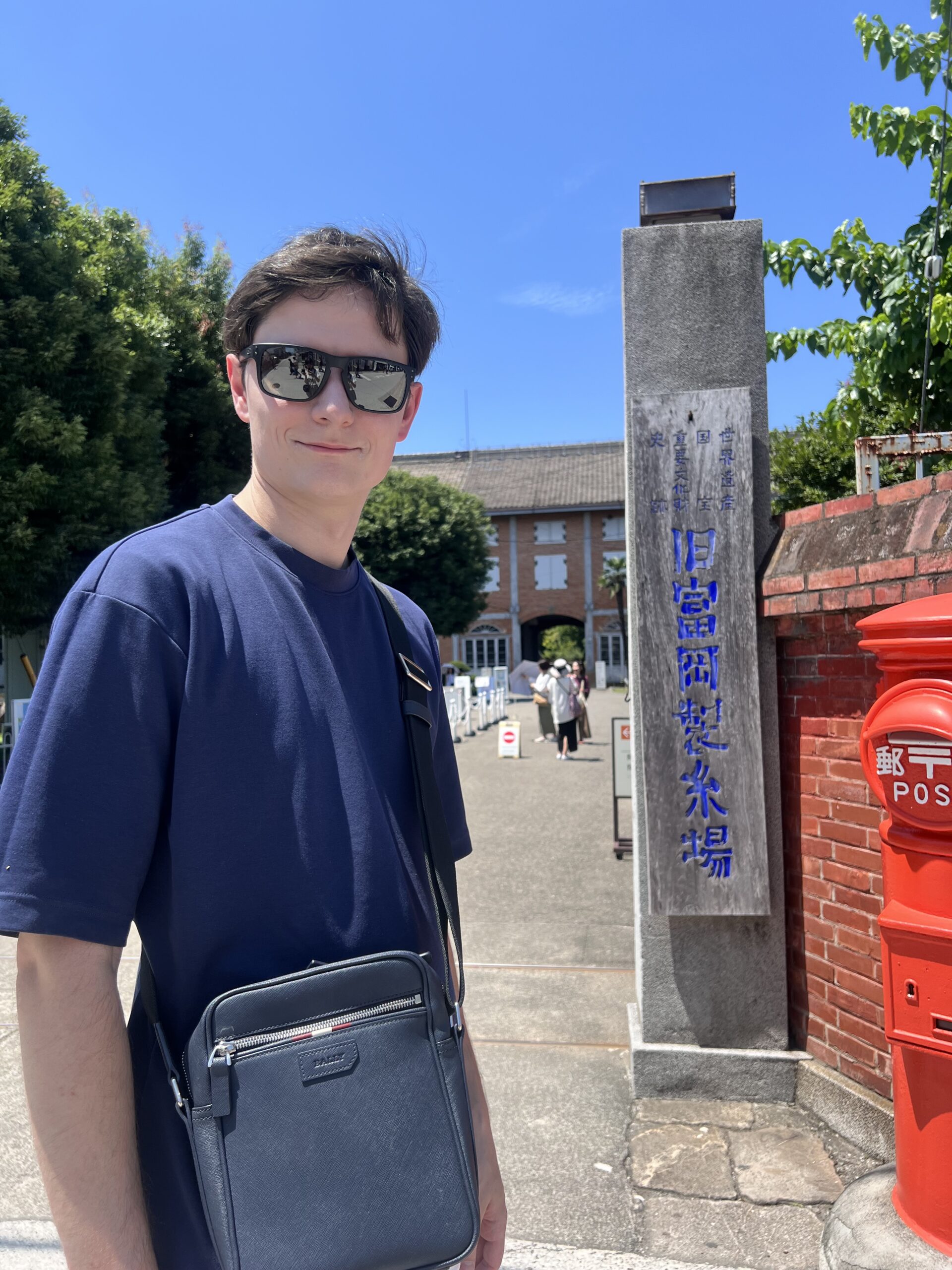
The main gate at the entrance to Tomioka Silk Mill.
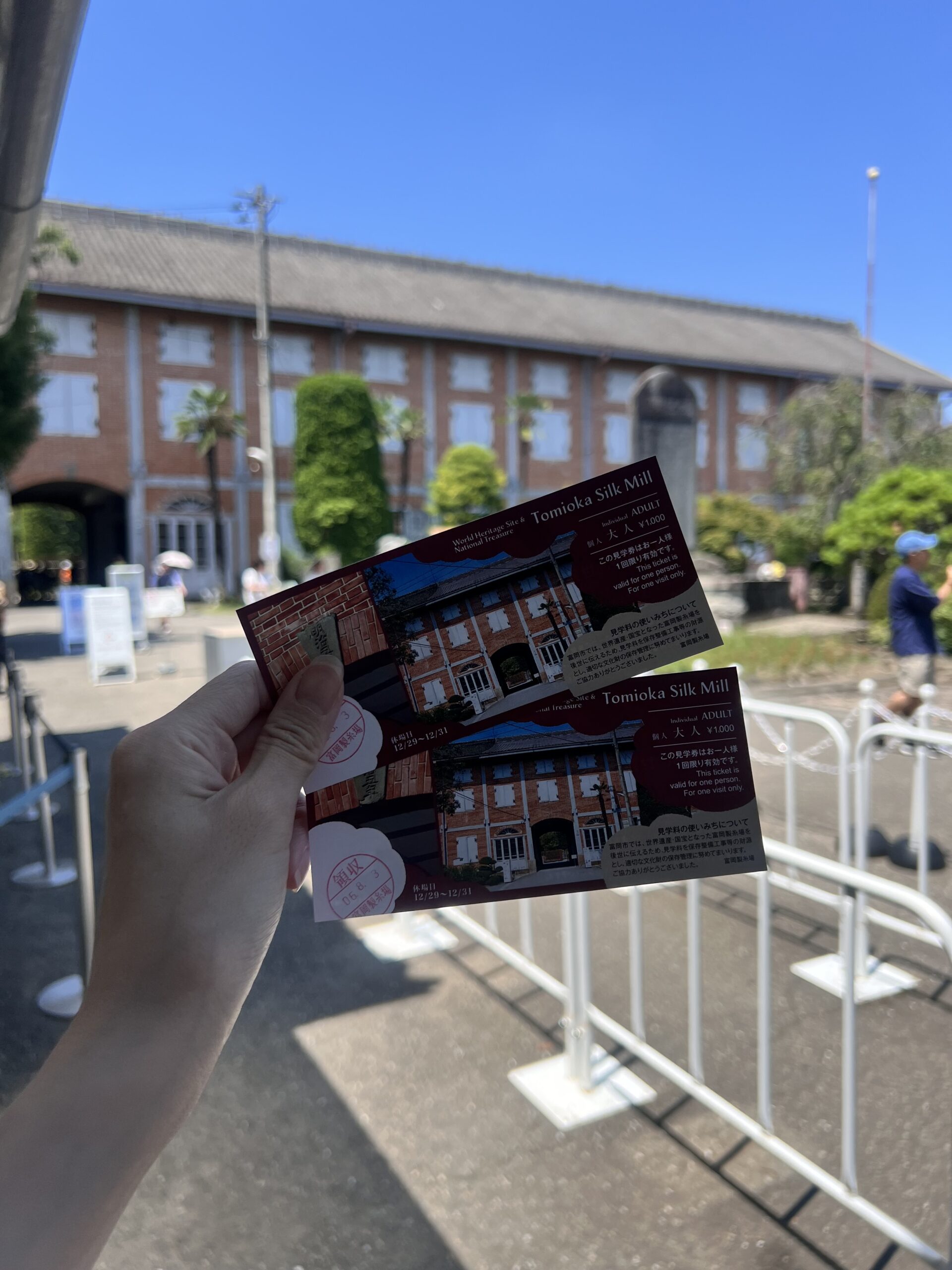
Admission ticket for Tomioka Silk Mill.
1. What Is Tomioka Silk Mill?
Tomioka Silk Mill was built in 1872 (Meiji 5) as Japan's first full-scale, modern mechanized silk-reeling factory. More than 300 female workers were recruited from all across the country to work here. What struck me most is how the story doesn't end at "they learned to reel silk" — the women who mastered the technique in those early years went on to become instructors themselves, carrying what they'd learned to factories all over Japan. This place wasn't just a factory; it was the origin point of a nationwide skill-transfer network, built entirely on the shoulders of the women who trained here first.
The main buildings — the Silk-Reeling Plant, the East Cocoon Warehouse, and the West Cocoon Warehouse — blend Japanese and European architectural styles. More than 150 years after construction, they're still remarkably close to their original form, and all three are now designated National Treasures.
2. Why Was It Built?
A government plan to build a nation that could compete with the West. The new Meiji government wanted Japan to become "a prosperous country that could stand as an equal alongside the nations of the West." Their strategy: build modern industry and earn foreign currency through exports. Tomioka Silk Mill was the flagship of that effort — a state-run factory built with machinery purchased from overseas and engineers invited in to teach the techniques.
Knowing this context changed how I looked at the building. It wasn't just a workplace — it was a deliberate, calculated national strategy, and every detail of the facility's design reflected that ambition.
3. Why It Became a World Heritage Site
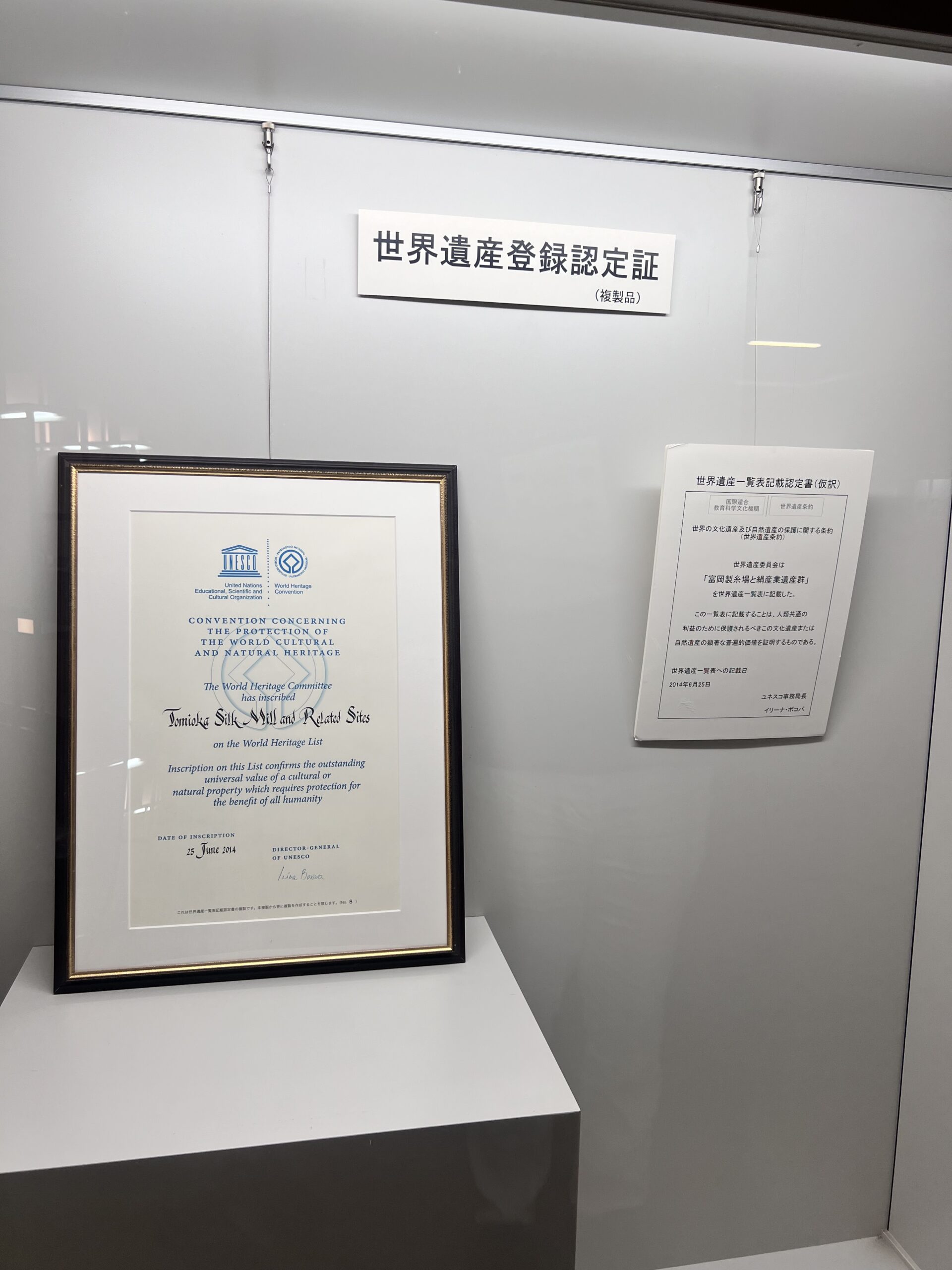
The official World Heritage certificate on display at the mill.
Because it revolutionized the global silk industry. Before this mill existed, raw silk production had always been limited in scale. Tomioka succeeded in mass-producing high-quality raw silk for the first time, and its techniques and sericulture know-how eventually spread overseas, driving the global development of the silk industry as a whole.
Silk had once been a luxury reserved for a privileged few. This mill helped turn it into something accessible to people worldwide, enriching lives and cultures far beyond Japan's borders. That contribution was formally recognized in 2014, when "Tomioka Silk Mill and Related Sites" was inscribed as a UNESCO World Heritage Site.
4. The Surprising Highlight: Worker Housing
The mill grounds still carry the feel of a small, self-contained town.
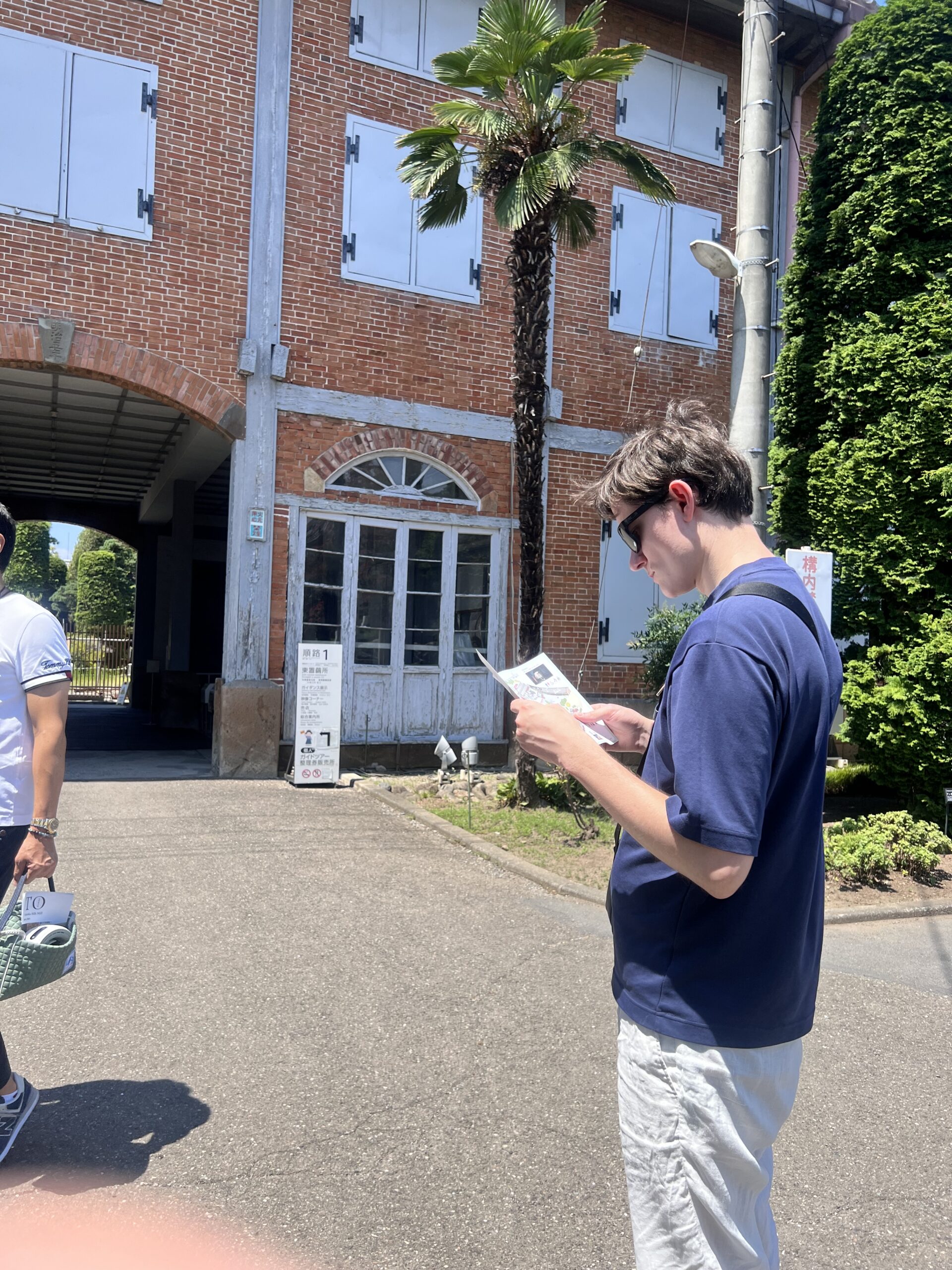
Honestly, I didn't expect the housing to be the part that stayed with me the most. The mill grounds included company housing, a clinic, a dining hall, and bathhouses — it was practically its own small town. Walking through the worker housing area gave me a much more visceral sense of what daily life was actually like for the people who worked here, compared to just reading about the factory's output.
💡 Don't skip "Shataku 76": This building displays retro furniture and a replica photo album from the Furuya family, who actually lived in the company housing. There's also an exhibit on silkworm biology — both are easy to walk past, but worth the extra few minutes.
5. What the Mill Looks Like Today
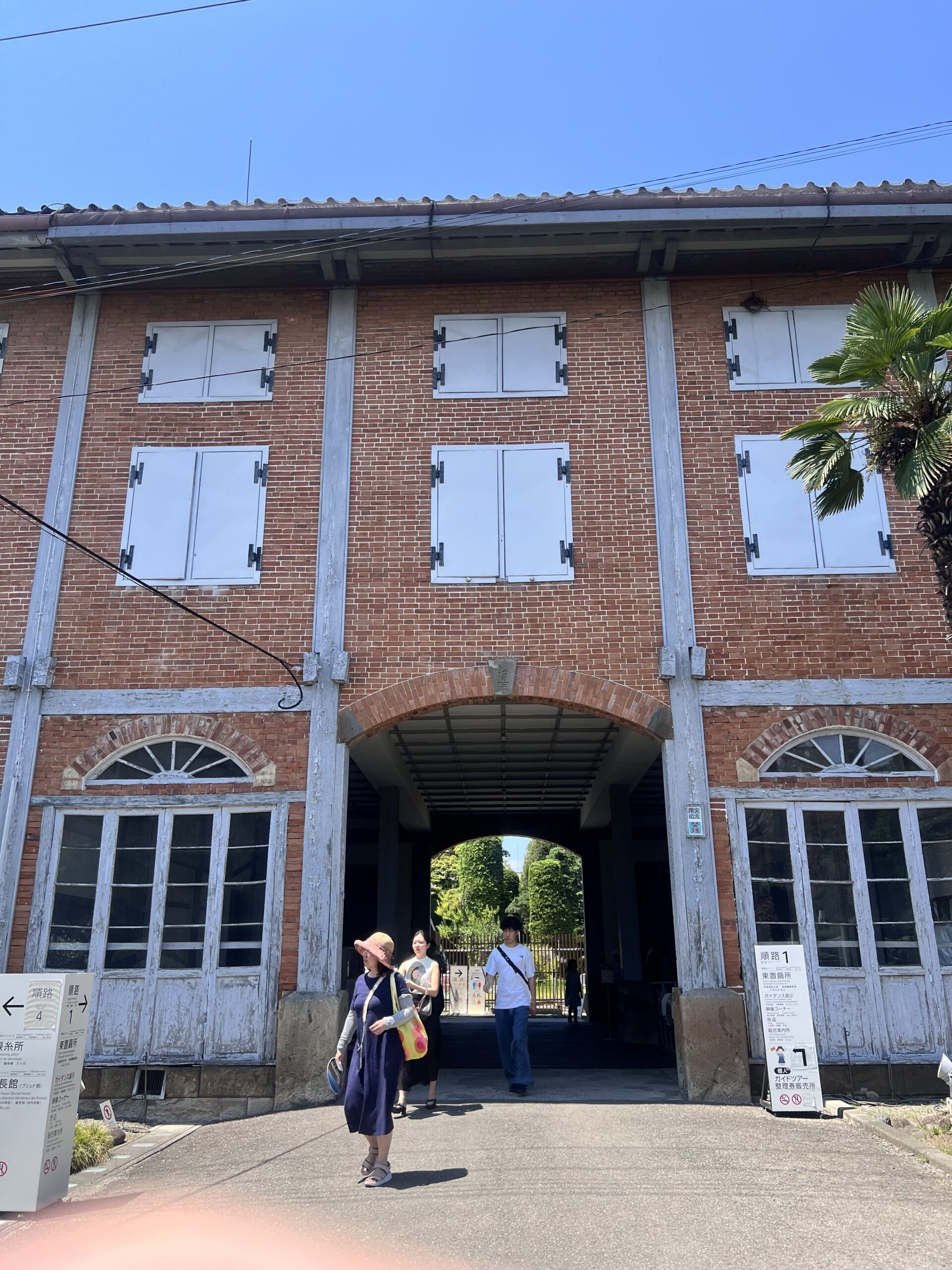
The brick-and-timber exterior, still standing after more than 150 years.
The West Cocoon Warehouse (a National Treasure), once used to store massive quantities of cocoons, has been renovated into a multi-purpose hall used for concerts and lectures. There's something almost surreal about the idea of hosting an event inside a National Treasure — apparently even weddings have been held there. Rental runs about ¥55,000 for a half-day, which honestly felt more reasonable than I expected for a building with this level of historical status.
6. What I Took Away From This Visit
Visiting a place I'd only ever known from a textbook page changed something in how I understood it. The convenient, comfortable life we live today is built directly on top of the daily lives of the people who worked here more than 150 years ago. And in some sense, we're still part of that same historical thread they started.
That's an obvious idea in the abstract, but rarely something you actually feel. Standing there, a real sense of respect and gratitude toward the people who came before us welled up — not as a concept, but as something felt in the gut.
Realizing the historical weight of this place, and having it lead me all the way back to thinking about the roots of my own existence — that's exactly what an "adult field trip" should feel like.
Gunma Prefecture, where Tomioka Silk Mill is located, is also home to some of Japan's most famous hot spring towns — Kusatsu and Ikaho — along with nature spots like Mt. Myogi, Mt. Asama, Mt. Akagi, Lake Haruna, and Oze. If you're already making the trip out here, there's plenty more to see nearby.
Leave a Reply