Give the Experience,
Not the Object
What Japan’s centuries-old gift-giving culture — from furoshiki wrapping to omiyage souvenirs — can teach us about giving something that actually lasts.
If you’ve ever spent an afternoon standing in a shop trying to pick “the right gift” for someone abroad, you already understand the problem Japan solved centuries ago: a gift isn’t really about the object. It’s about what the object says on your behalf.
In Japan, gift-giving is woven into daily life — not reserved for birthdays and holidays, but used constantly to express gratitude, respect, and the strength of a relationship. For anyone drawn to Japanese culture, understanding this custom is one of the most rewarding ways to connect with it. Here at Wakacin, it’s also the philosophy behind the experience gifts we offer.
A Gift Reflects the Relationship, Not Just the Occasion
In Japan, the value and nature of a gift are expected to match the closeness of the relationship — a gift for a colleague should feel different in weight than a gift for a close partner or mentor. Because of this, mass-produced items are often seen as less meaningful than something handmade, one-of-a-kind, or made by a skilled craftsperson. The underlying message is simple: I chose this specifically for you.
The Art of Wrapping
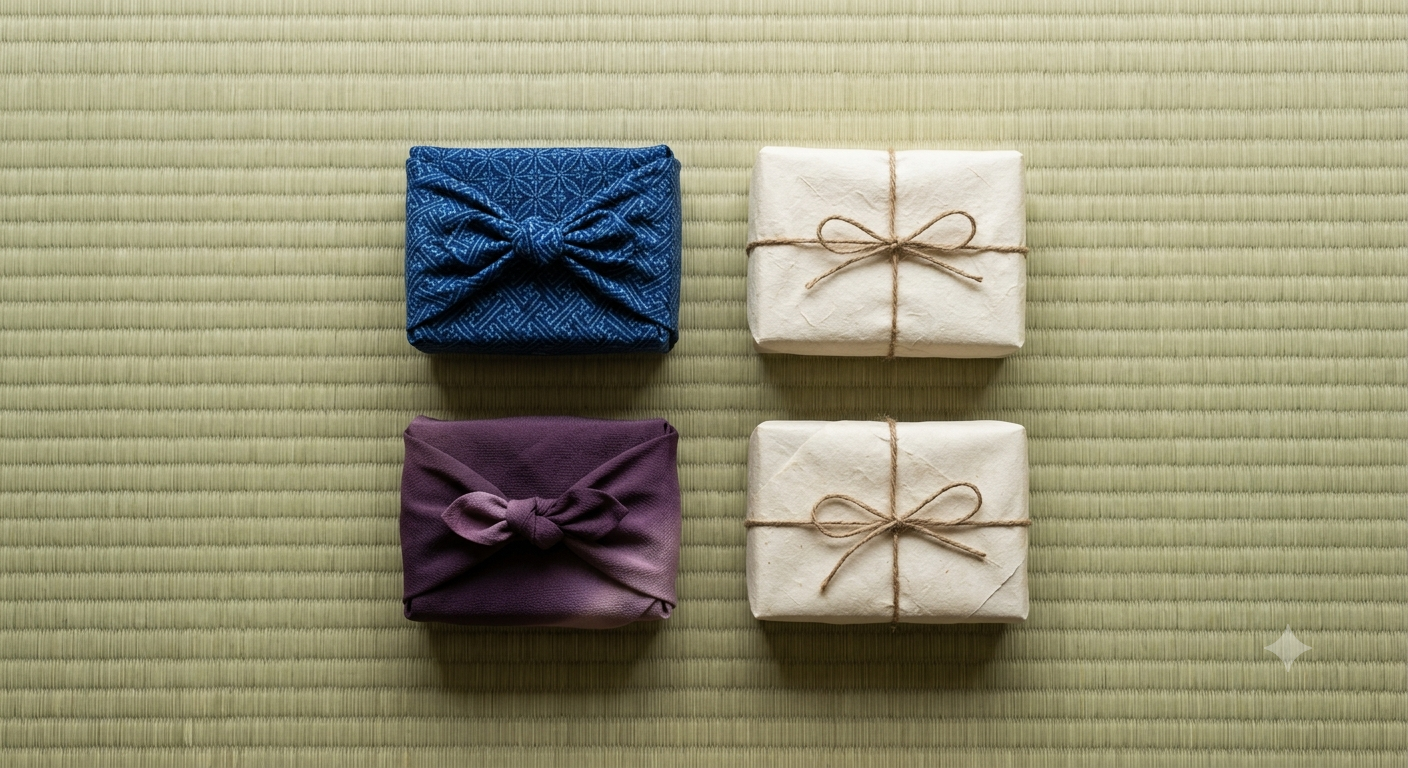
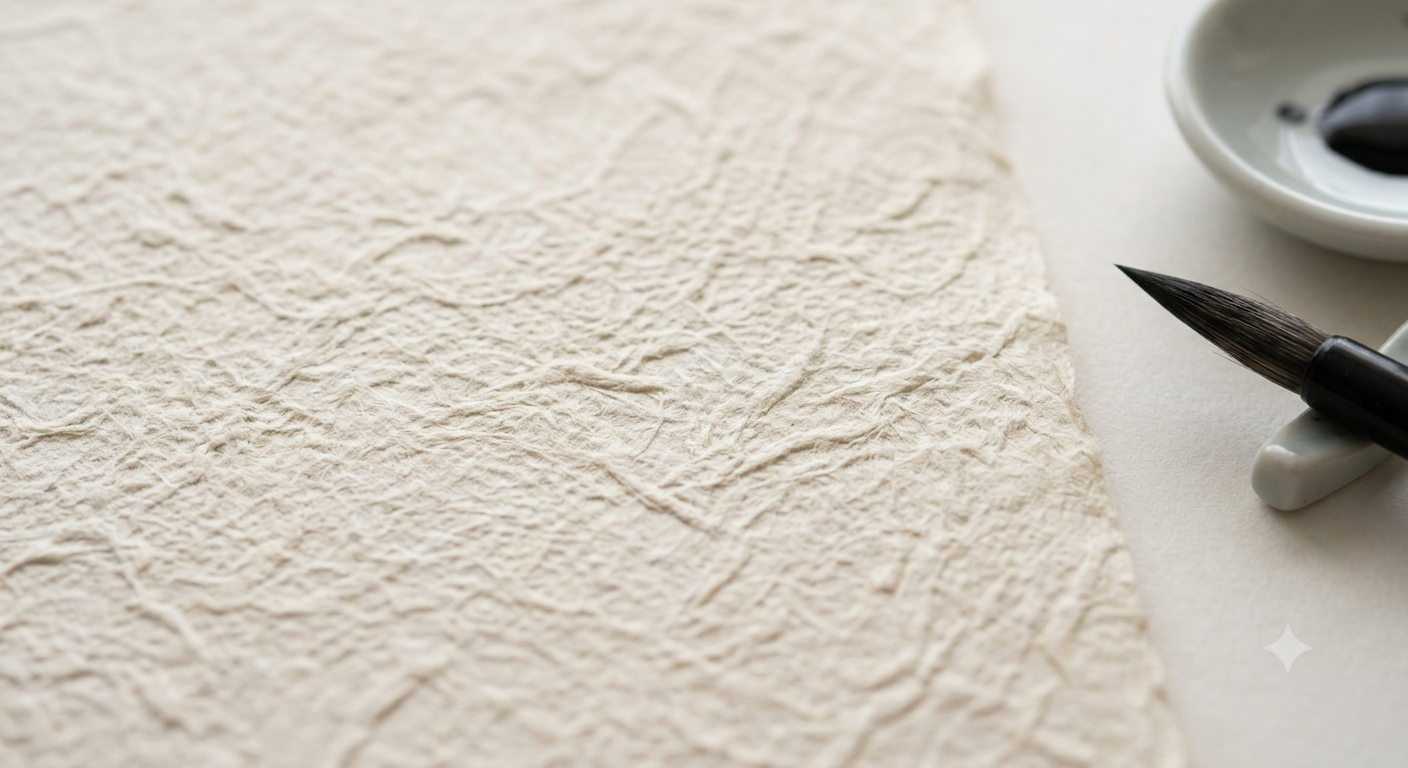
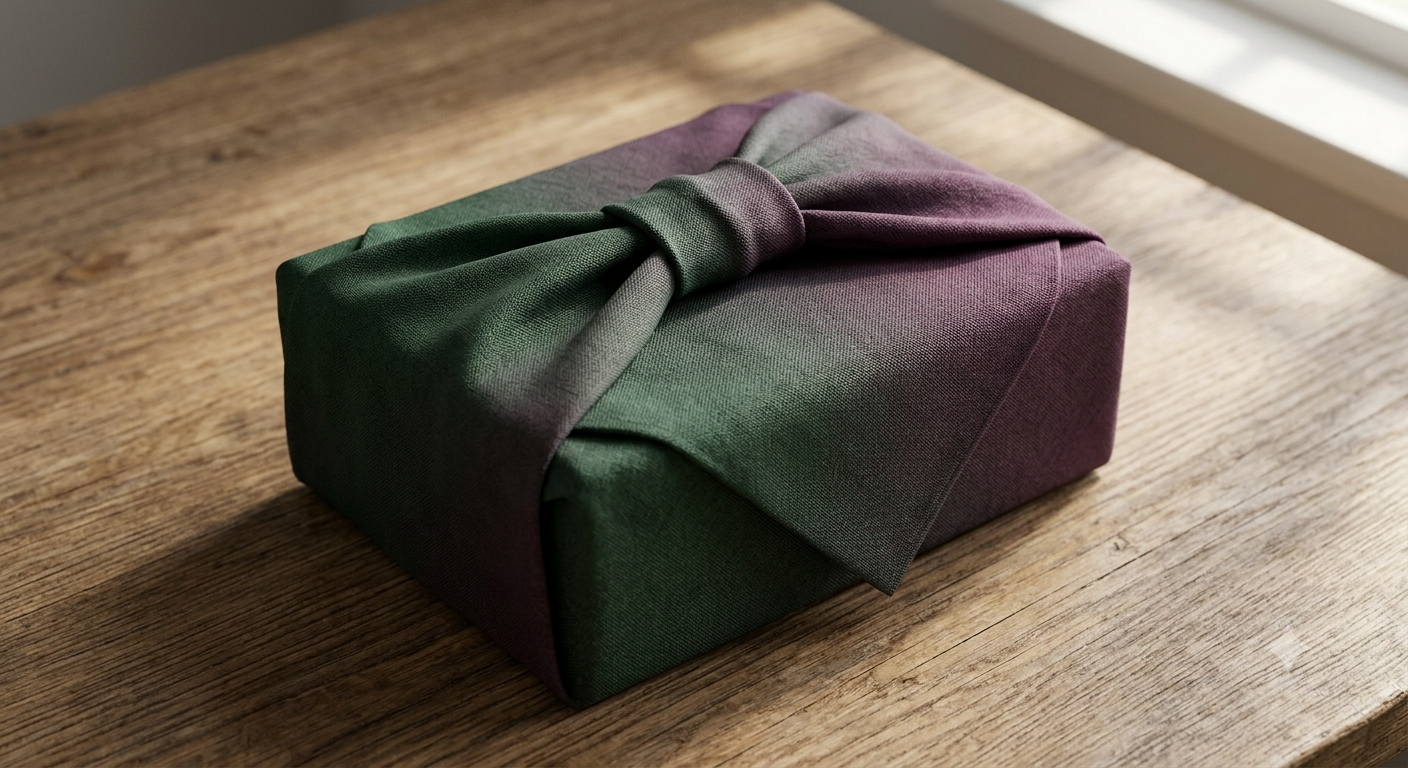
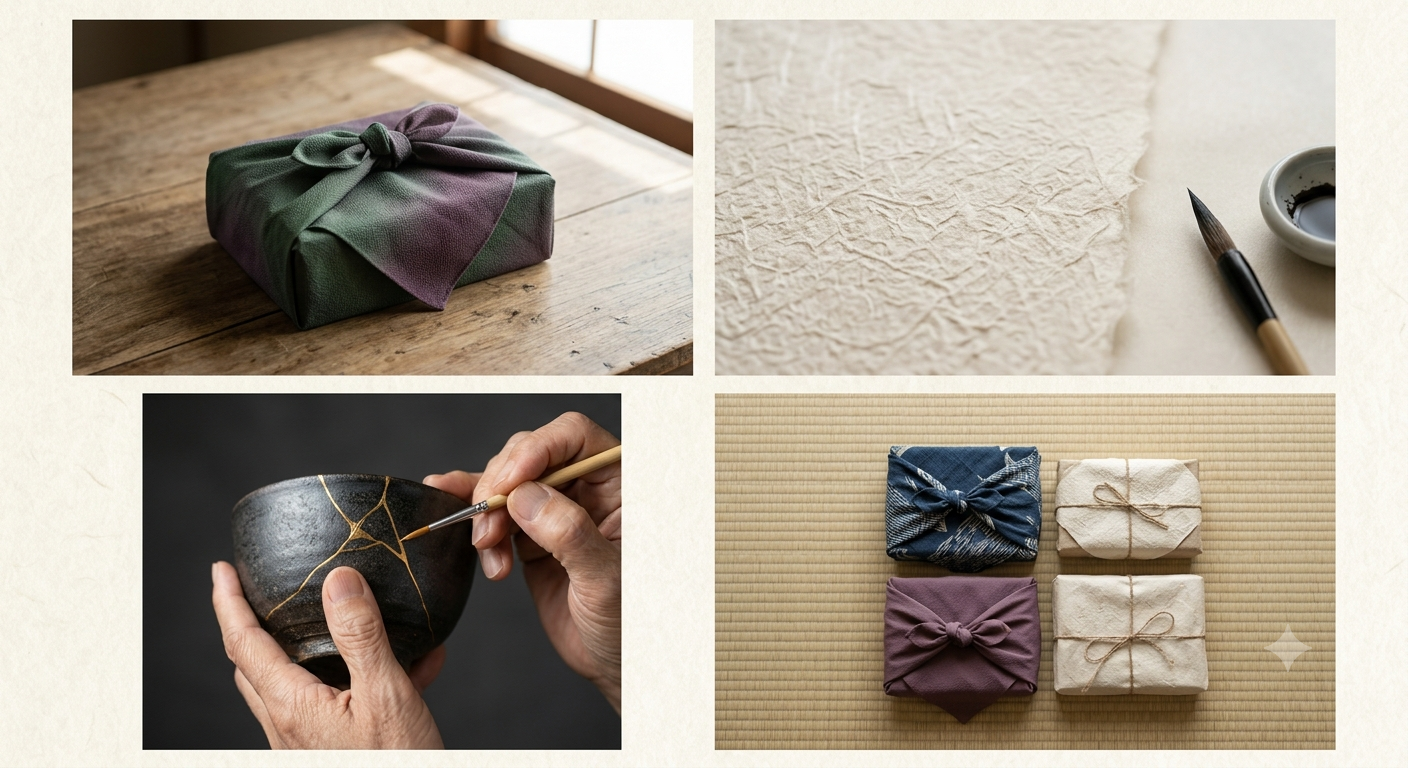
In Japanese gift-giving, presentation can matter as much as the gift itself. Two traditions stand out. Furoshiki, the practice of wrapping gifts in cloth, dates back over a thousand years and has recently gained popularity worldwide for being both beautiful and eco-friendly. Washi, handmade paper with roots going back to the Nara period, is prized for its texture and durability — a small but tangible sign of the care put into the gift.
Even color carries meaning. Green suggests longevity and good fortune, purple suggests nobility — while white wrapping or red accents are avoided, as they’re associated with funerals.
“I chose this specifically for you” — the one sentence every Japanese gifting custom is quietly built around.
Beyond the Object: Gifting Time and Story
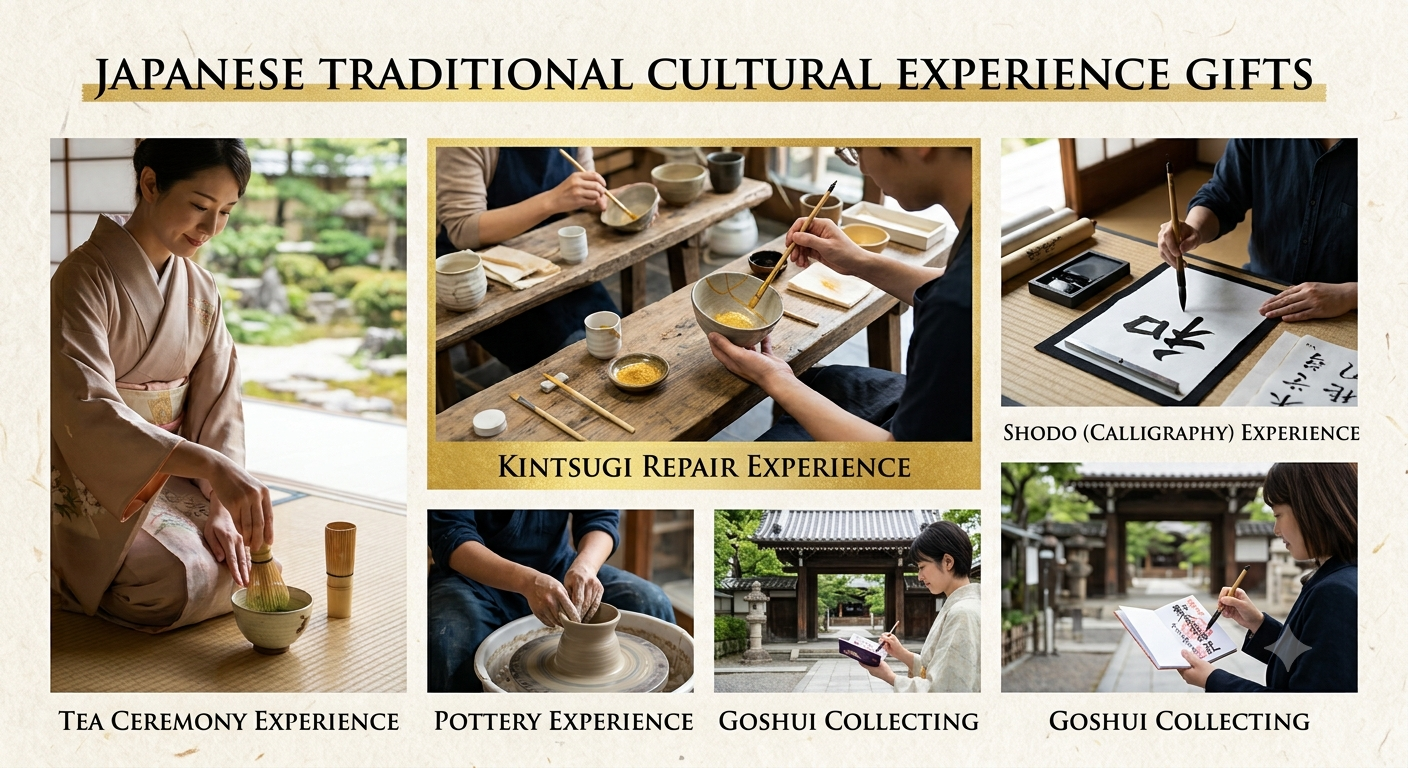
This is exactly where Wakacin’s experience gifts come in — kintsugi, calligraphy, and sashiko aren’t souvenirs you glance at once and forget. They’re small windows into a much older way of thinking.
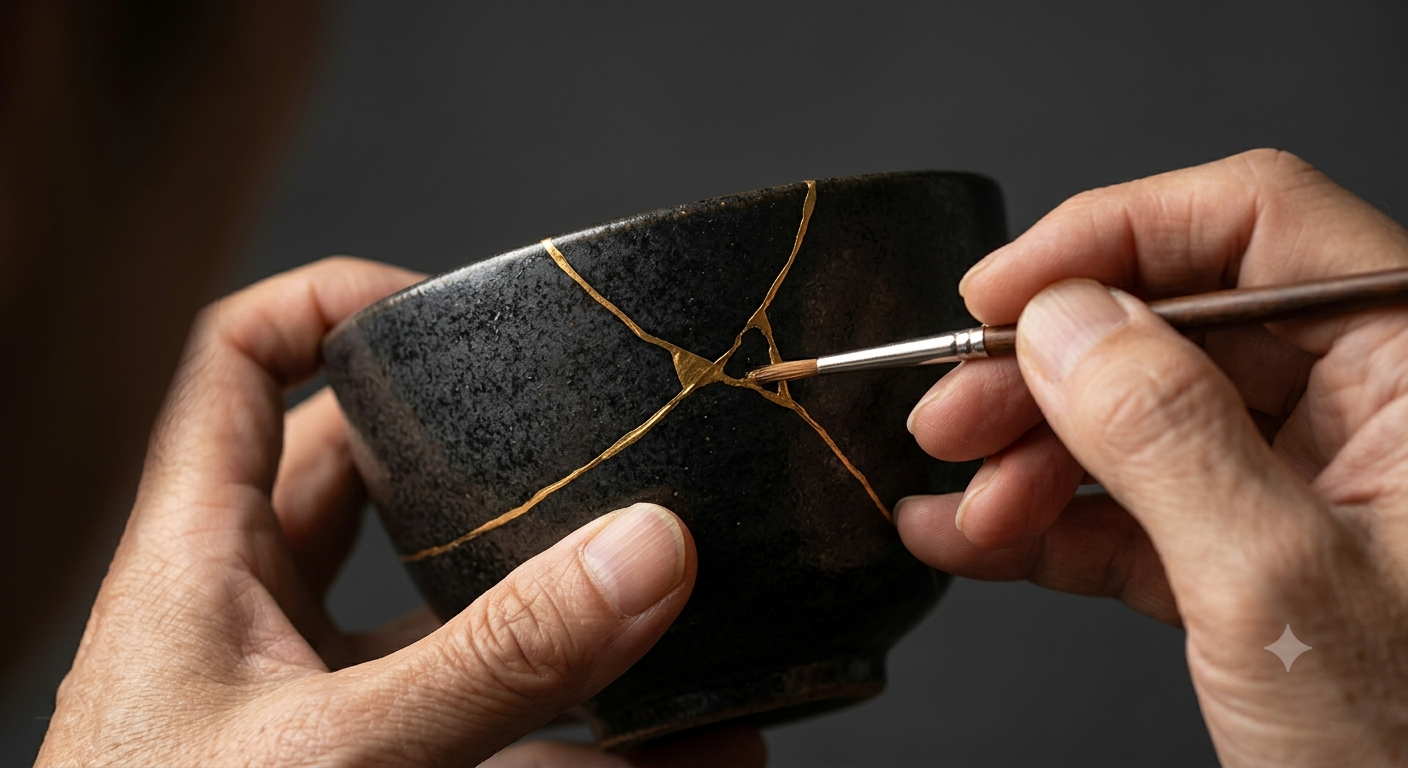
Kintsugi
Repairing broken ceramics with gold lacquer, so the crack becomes part of the beauty rather than a flaw to hide. A quiet lesson in resilience.
Calligraphy
A single brushstroke, done slowly and with full attention. The result says less about skill and more about the state of mind in that moment.
Sashiko
Traditional running-stitch embroidery, originally developed to mend and reinforce cloth so it could be used for years longer.
For someone living outside Japan, these aren’t just crafts — they’re a way to experience the values behind Japanese gift culture, rather than just read about them.
Omiyage: The Art of the Souvenir
If you’ve traveled in Japan, you’ve likely encountered omiyage — the custom of bringing back small, local specialty gifts for coworkers, friends, and family after a trip. Unlike a generic souvenir, omiyage is expected: showing up empty-handed after time away can feel like a missed gesture of consideration.
What makes omiyage interesting is its logic. It’s not about finding the most expensive item — it’s about representing the place you visited, in a small, shareable form. It’s a gift culture built on thoughtfulness over cost.
When Gifts Are Given
Japan also has two dedicated gifting seasons: Ochugen in mid-summer and Oseibo in early December, both centered on expressing gratitude to people who’ve supported you over the past months — clients, mentors, family. Unlike Western holiday gifting, these aren’t about surprise; they’re a scheduled, almost ritual acknowledgment of relationships that matter.
A Gift Is a Kind of Translation
Even across language and culture, the impulse behind a gift is universal: I’m thinking of you. What Japan has refined, over centuries, is how to express that — through material, presentation, timing, and quiet gesture.
At Wakacin, we try to carry that same spirit into experience gifts made for people outside Japan — not a souvenir to place on a shelf, but a small, hands-on encounter with the values behind the custom itself.
Give Someone a Piece of This Story
Explore our Kintsugi, Calligraphy, and Sashiko experience gifts — made to bring this tradition to life, wherever you are.
View Experience Gifts
Leave a Reply