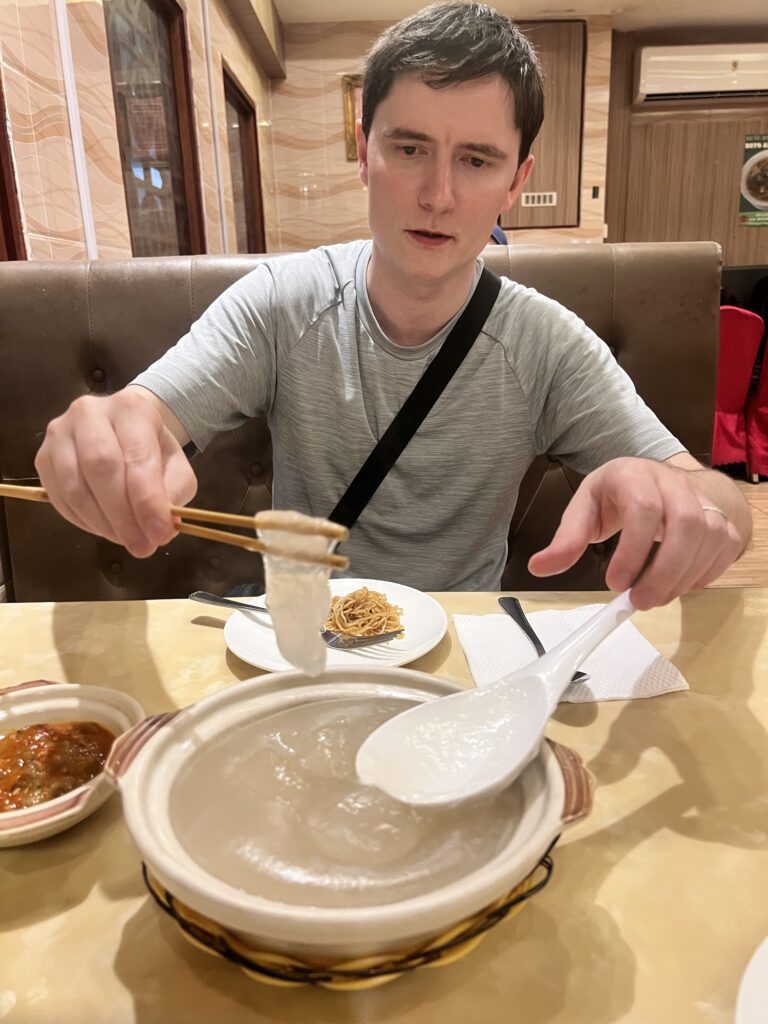
While traveling in Brunei, I discovered one of the country’s most unique traditional foods: Ambuyat.
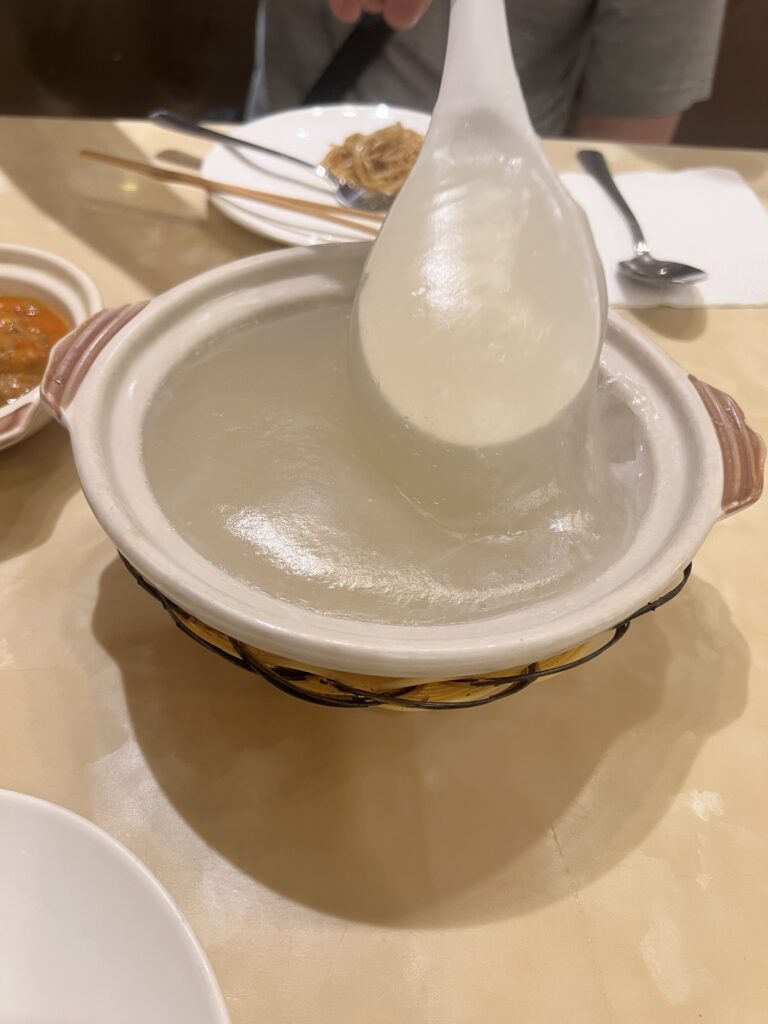
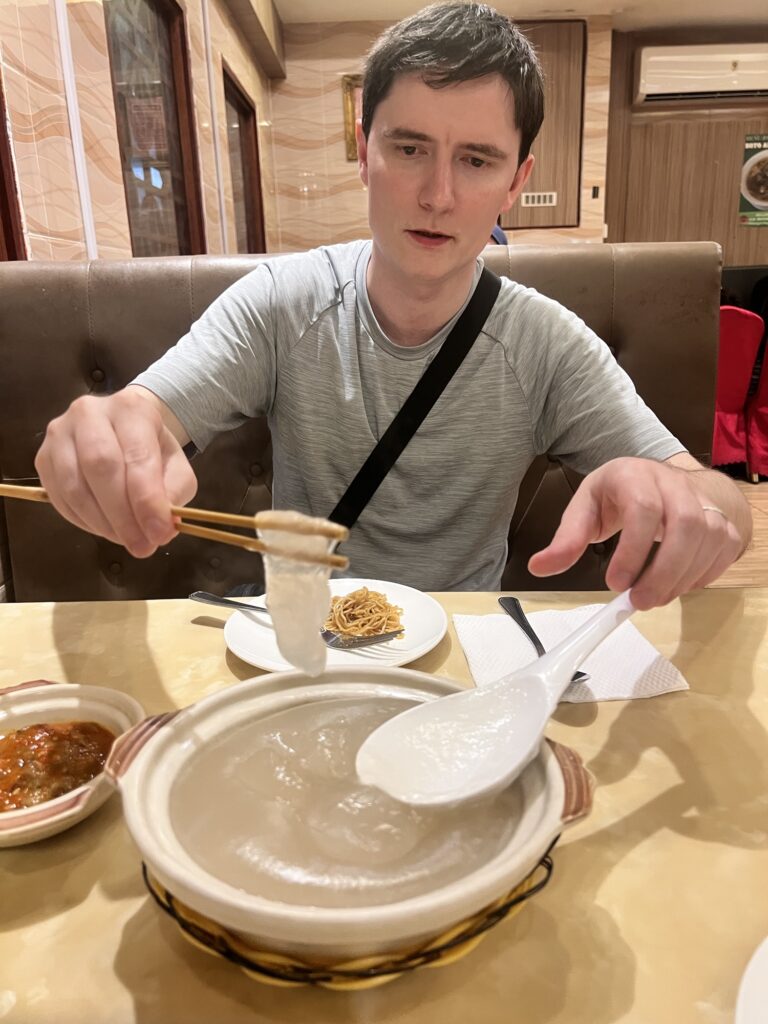
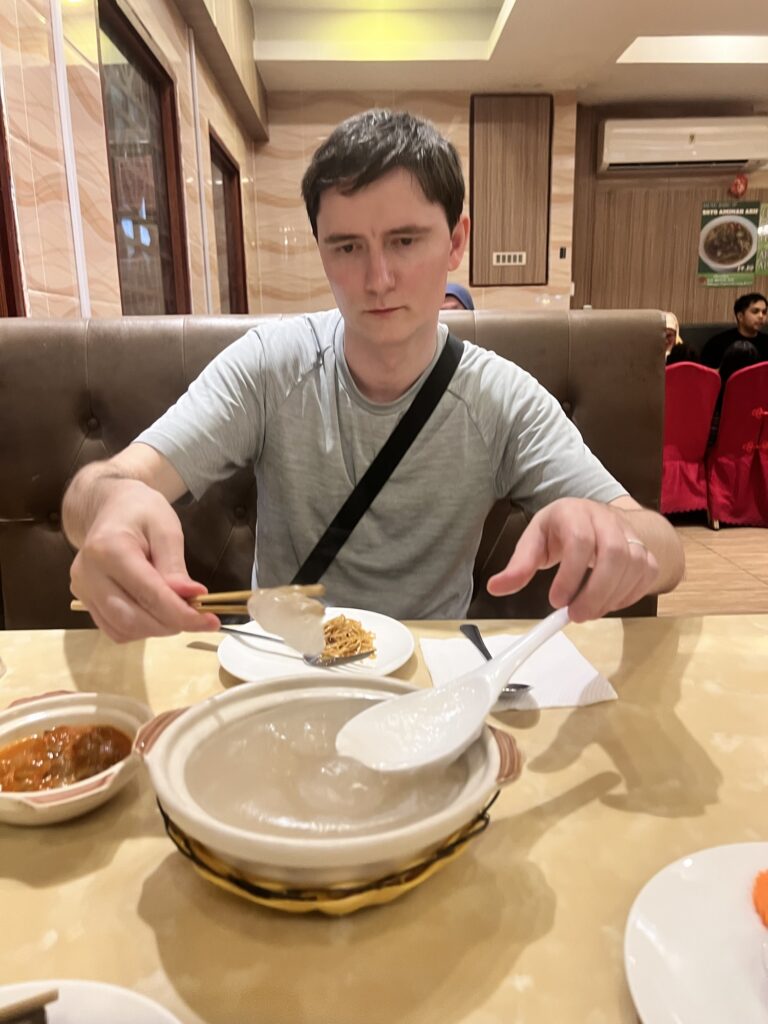
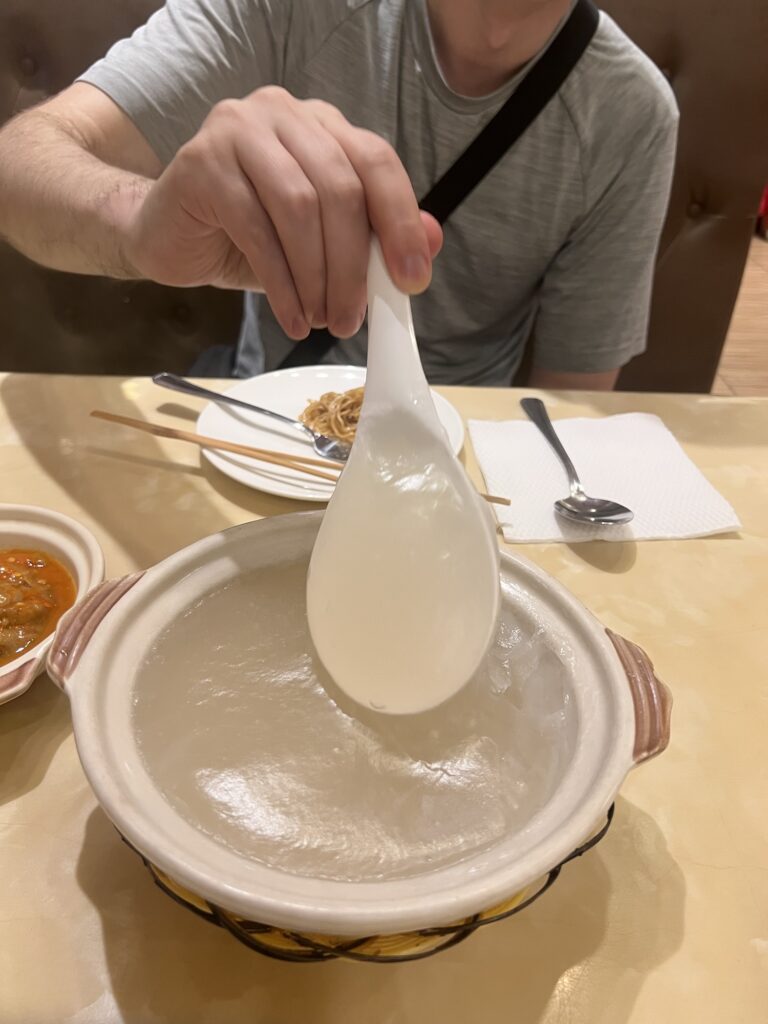
At first glance, it looks like a bowl of white sticky paste.
Honestly, I had no idea what it was.
But this mysterious dish is actually one of the most iconic foods in Brunei.
What Is Ambuyat?
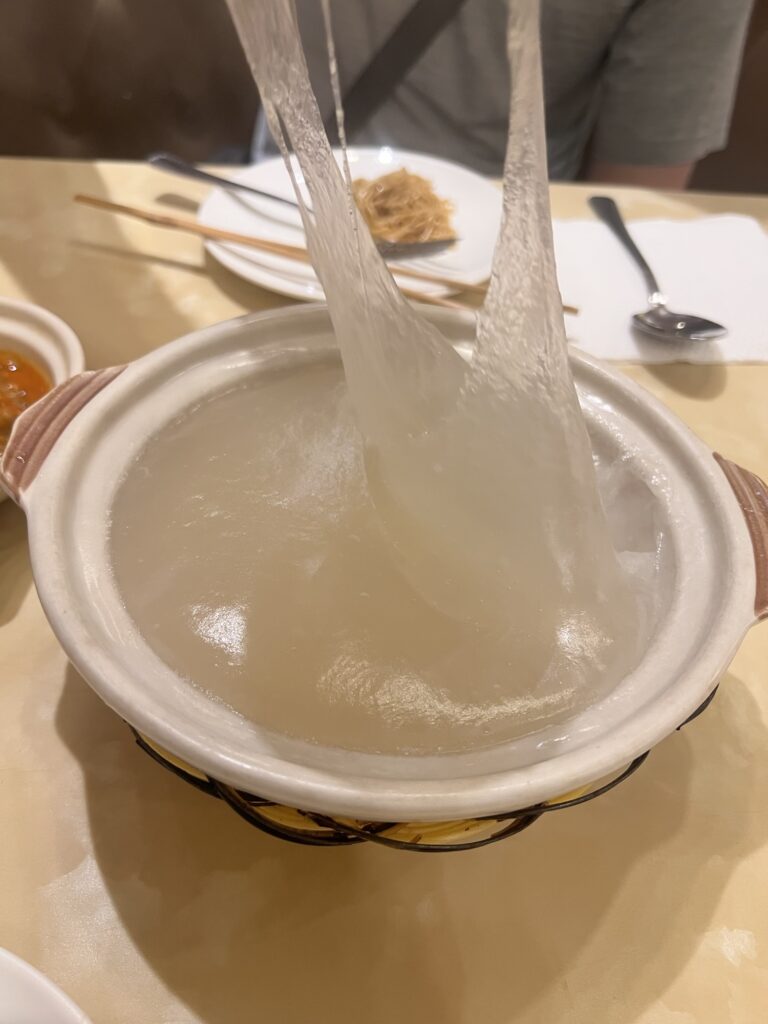
Ambuyat is made from sago starch, mixed with hot water until it becomes thick, glossy, and stretchy.
It has a soft, chewy texture—somewhere between mochi and a smooth rice paste.
The flavor itself is mild, so it is usually eaten with rich dipping sauces.
How Do You Eat It?
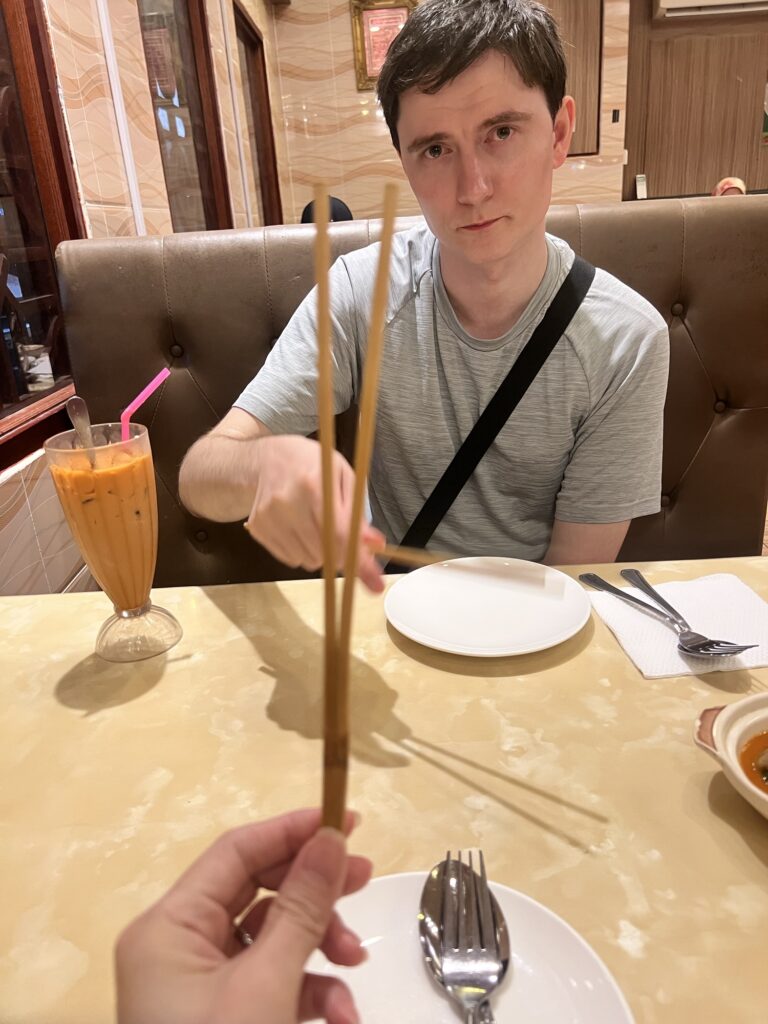
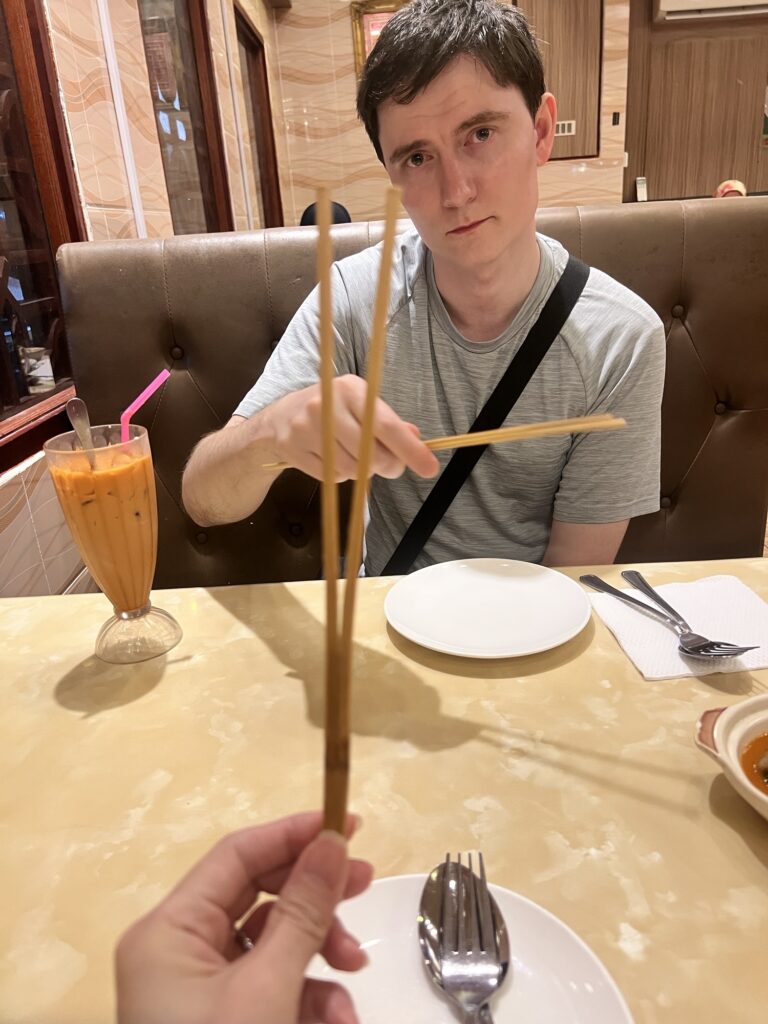
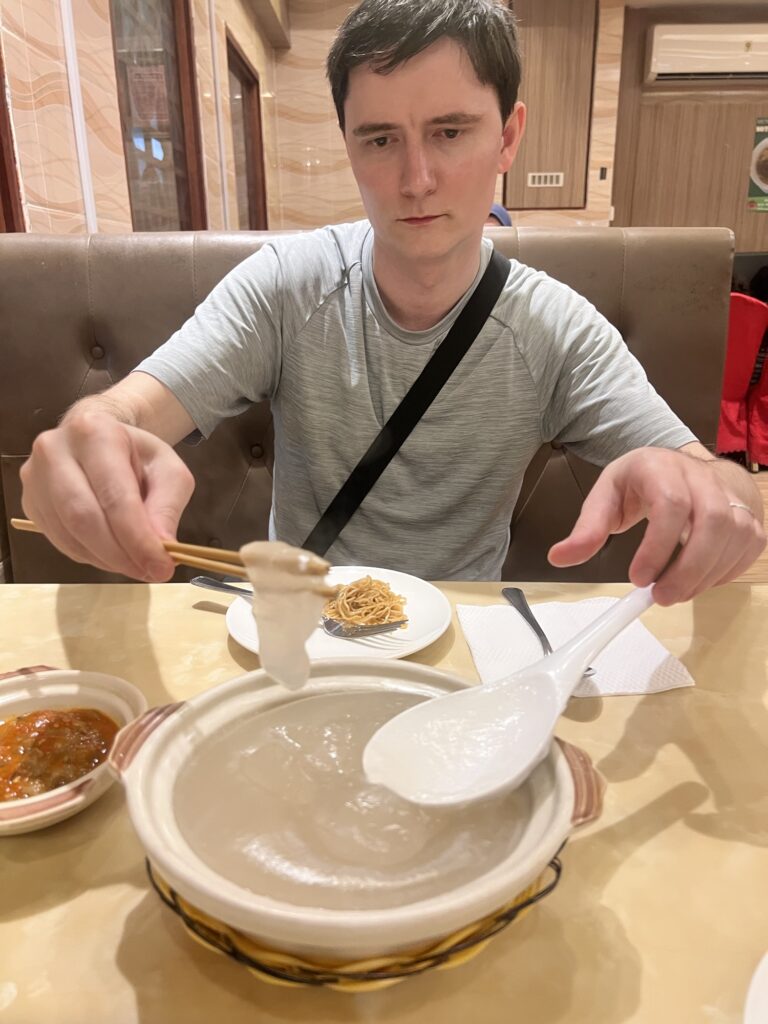
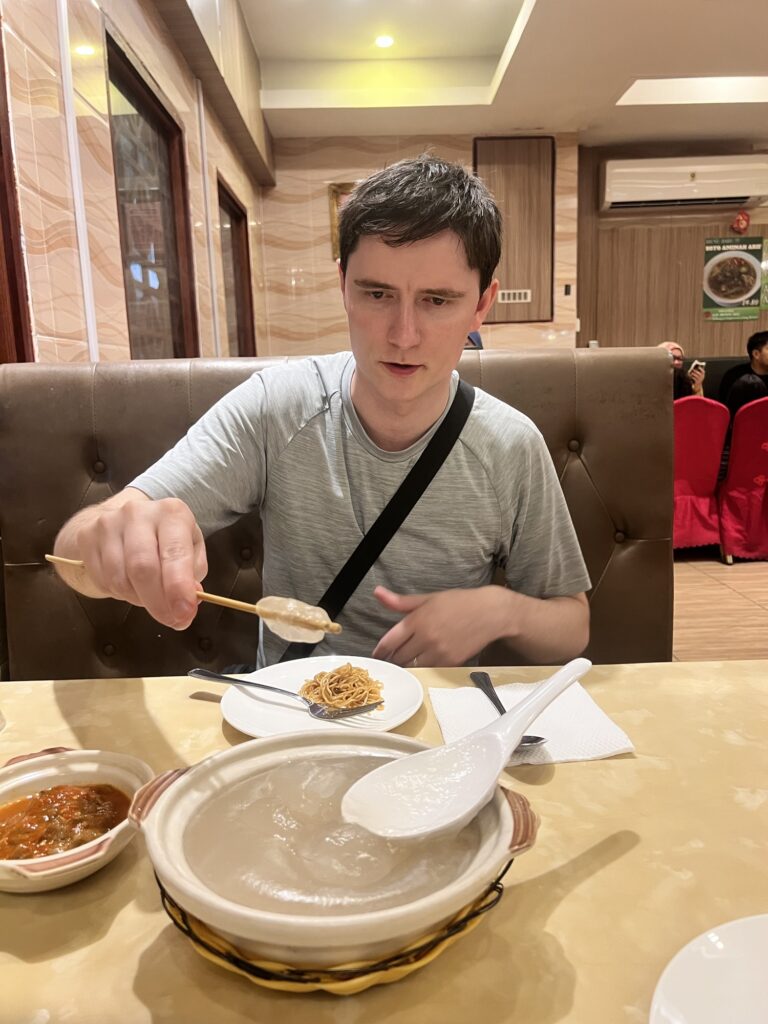
Traditionally, it is eaten with bamboo sticks called chandas.
Simple Steps:
1. Twist the sticks into the sticky Ambuyat
2. Lift a small portion
3. Dip it into sauce
4. Enjoy the texture and flavor together
It is more fun than it sounds.
What Else Is Famous to Eat in Brunei?
Brunei has a mix of Malay, Chinese, and regional Bornean influences, so the food scene is underrated.
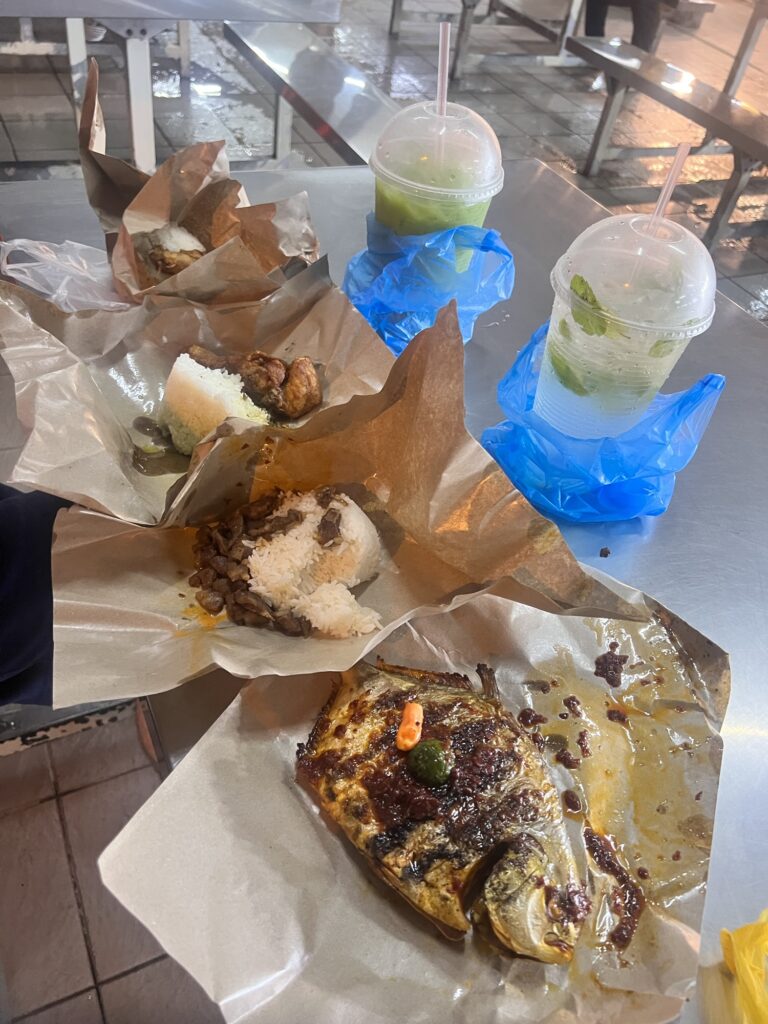
Nasi Katok
One of the most famous everyday meals in Brunei.
Simple but delicious:
• Rice
• Fried chicken
• Spicy sambal sauce
Affordable, satisfying, and loved by locals.
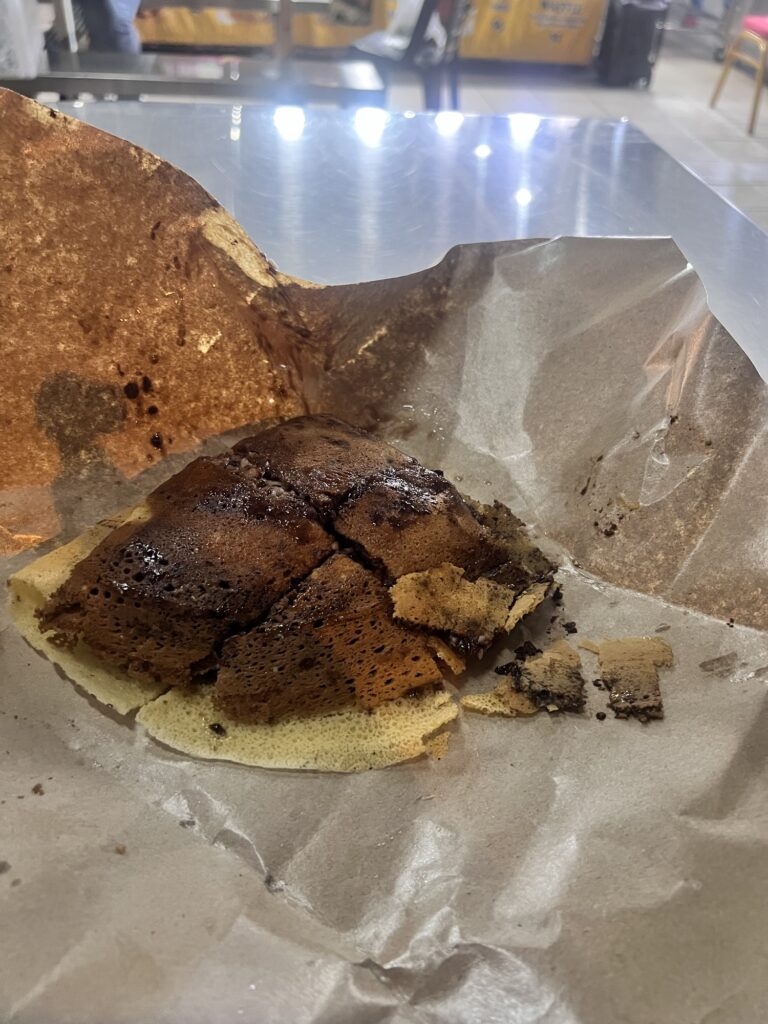
Roti Kahwin
A popular breakfast or tea-time snack.
Crispy toast filled with butter and sweet kaya (coconut jam).
Perfect with coffee.
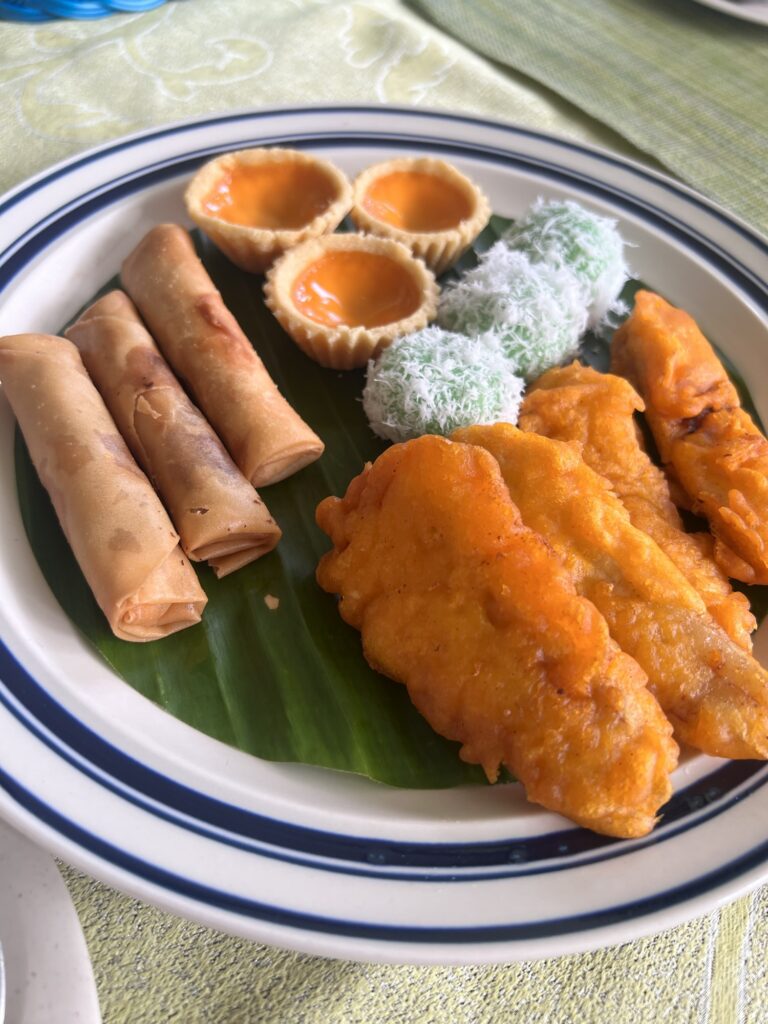
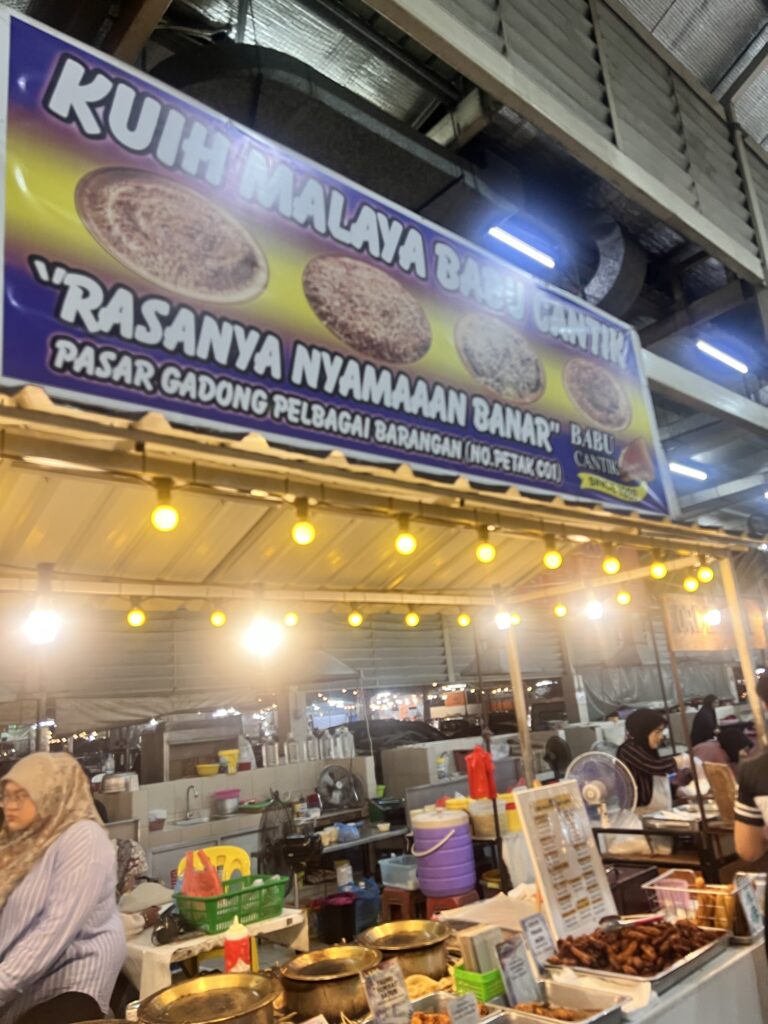
Kuih Melayu
Colorful local desserts made with coconut, rice flour, pandan, and palm sugar.
Great for travelers who like trying traditional sweets.
Satay
Easy to find at markets and food stalls.
Always a good idea.
My Honest Impression of Brunei Food
Before visiting, I did not expect much from the food scene.
But Brunei surprised me.
The food feels:
• Comforting
• Flavorful
• Authentic
• Less commercialized than other tourist destinations
It feels like eating what locals actually eat.
Final Thoughts
If you visit Brunei, don’t just search for international restaurants.
Try:
• Ambuyat
• Nasi Katok
• Roti Kahwin
• Kuih Melayu
The country may be small—but the food culture is worth exploring.
Leave a Reply